Histology–Genomics Integration
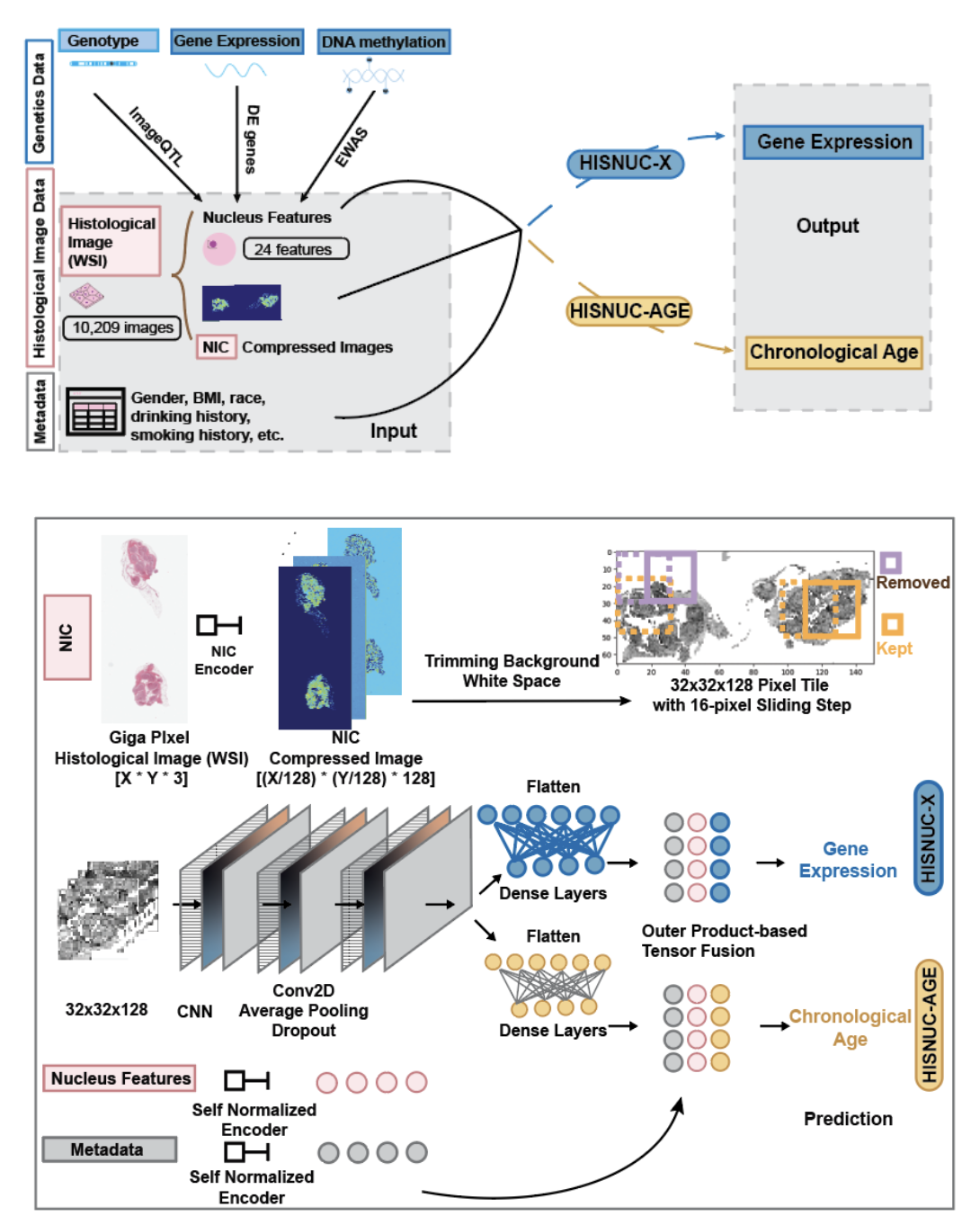
We develop statistical and deep-learning frameworks (HISNUC) that link histological image features (including nuclear morphology, tissue texture, and cellular organization) to genotype, transcriptome, and chronological age. This approach has identified novel imageQTLs and demonstrated that gene expression and age can be predicted directly from tissue morphology.
Neurogenomics and Gene Regulation
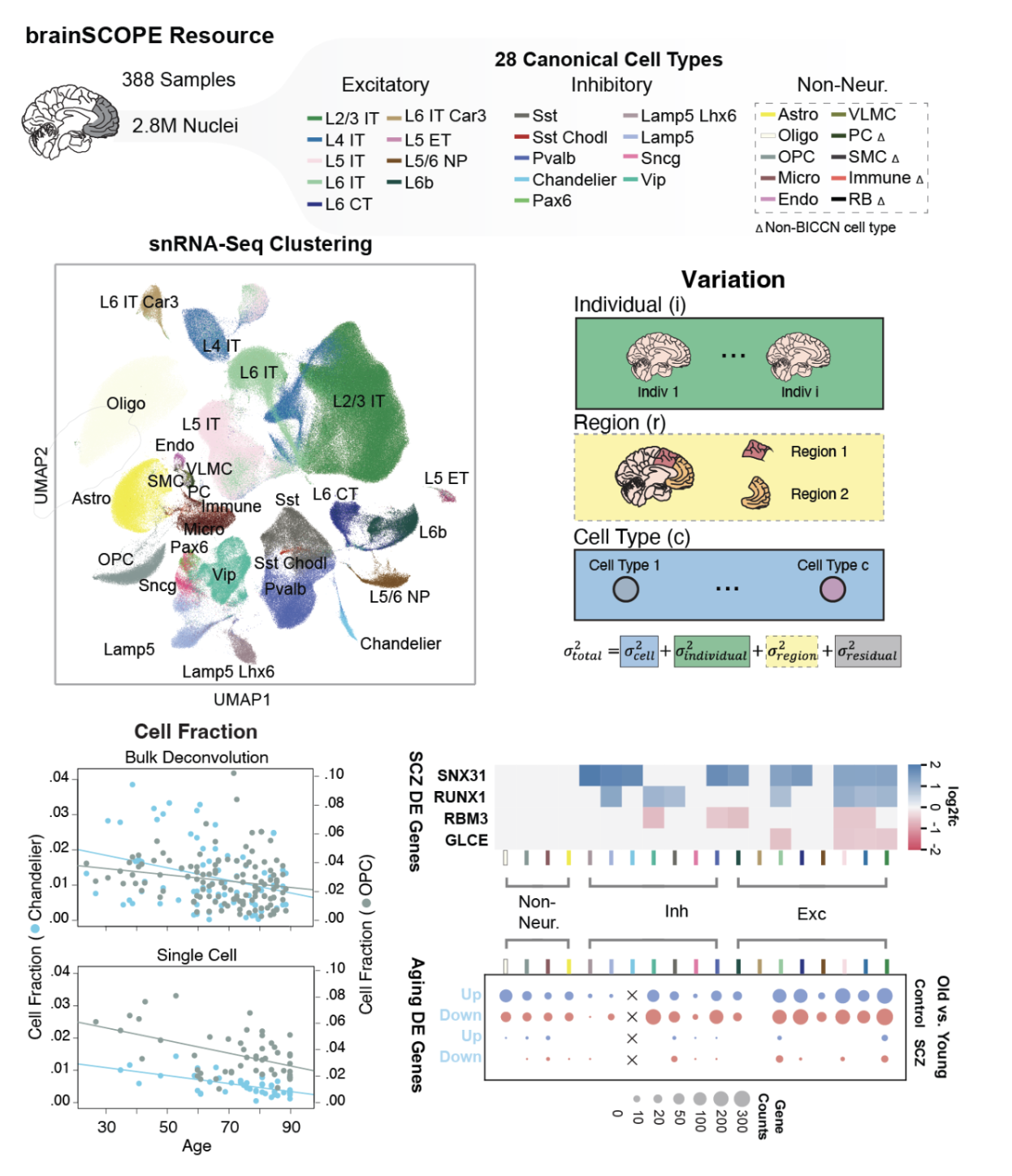
We investigate cell-type–specific gene regulation in the human brain, with a focus on psychiatric disorders and aging. As part of the PsychENCODE Consortium, we analyzed millions of nuclei from 388 human prefrontal cortex samples, uncovering molecular mechanisms of schizophrenia, autism, and bipolar disorder. We are also interested in how spatial organization reshapes gene regulation within each cortical layer, leveraging spatial transcriptomic data.
AI-Enabled Pathogen Genomics and Surveillance
We also develop AI-driven frameworks that connect health data with pathogen genomics. In partnership with the Wadsworth Center (New York State Department of Health), we enable scalable analysis of infection-associated tissue compartments and real-time outbreak surveillance.